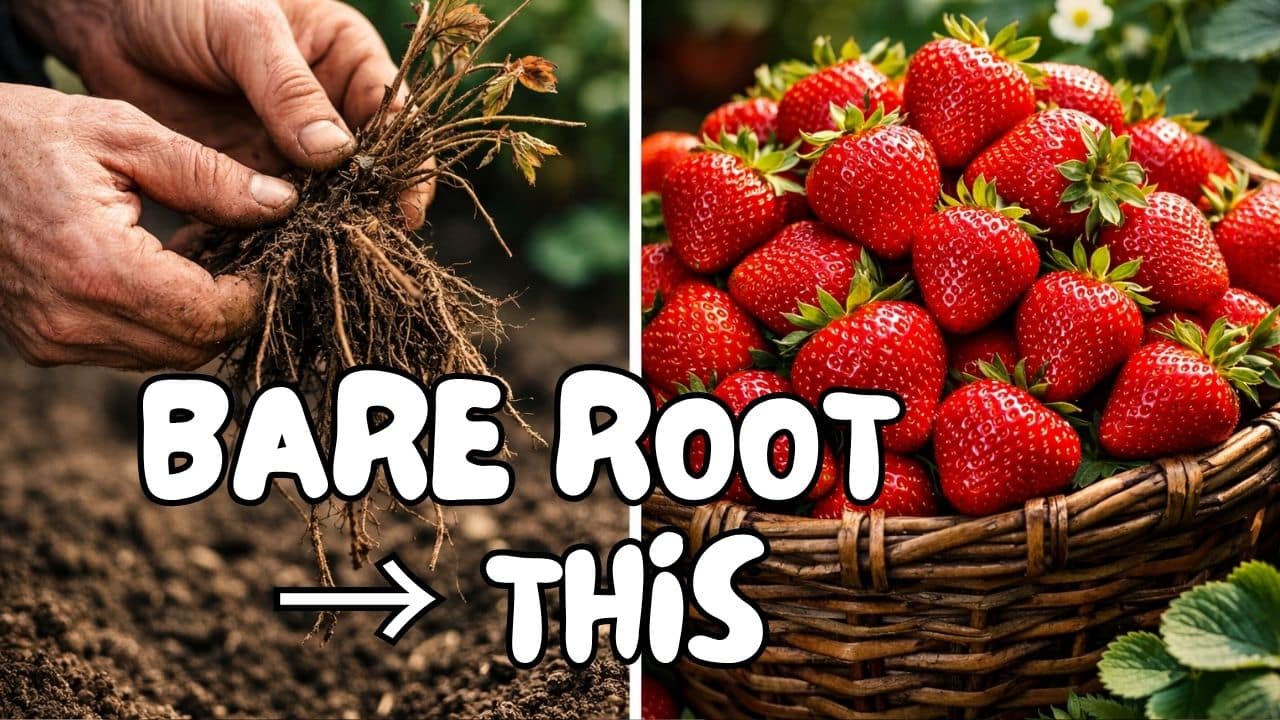
If you want to grow gourmet berries without the garden center price tag, planting strawberries from bare root is the most effective method available. While these dormant roots might look like dry sticks when they first arrive, they are the key to building a high-yield, professional-grade strawberry patch.
In this guide, I’ll show you exactly how I achieved vibrant, healthy plants in just 14 days using this simple, proven process.
The Benefits of Planting Strawberries from Bare Root
Most gardeners buy potted plants, but planting strawberries from bare root offers two major advantages that you won’t get at a local nursery:
- Elite Varieties: You can source specialized varieties like Mara des Bois—a French favorite known for its intense, wild flavor—which are rarely sold in pots.
- Better Value: Bare roots are significantly more affordable, allowing you to plant a large area for a fraction of the cost of established plants.
When is the Best Time to Plant Strawberries ?
Success starts with timing. There are two primary windows for planting strawberries from bare root:
- Early Spring (The Classic Choice): Plant as soon as the soil can be worked. This gives the roots a full season to establish before the winter dormancy.
- Late Summer / Early Autumn: This is a “pro” move. Planting in late August or September allows the roots to settle in while the soil is still warm. By next spring, these plants are already “at home” and ready to explode with growth.
1. Rehydration: The 2-Hour Rule
Before they go into the ground, bare roots need a “wake-up call.” They’ve lost moisture during storage and transport, so rehydrating them is non-negotiable.
- The Method: Submerge the roots in a container of lukewarm water.
- The Timing: Leave them for one to two hours.
- The Risk: Do not soak them overnight. Roots need oxygen; leaving them in water for too long will cause them to rot before they even hit the soil.
2. Trim for Success
It might feel wrong to cut the roots of a new plant, but it’s a pro-tip for faster establishment. If the roots are longer than 20–30 cm, trim about a third off with clean scissors.
This prevents the roots from curling at the bottom of your pot (which can choke the plant) and encourages the growth of new, fine feeder hairs.
3. Mastering the Crown Depth
The “crown” is the thick junction where the roots meet the leaves. Getting its height right is the difference between a thriving plant and a dead one.
- Too Deep: The crown rots.
- Too Shallow: The roots dry out.
- The “Mound” Trick: Don’t dig a flat hole. Create a small dome of soil at the bottom of your planting site. Spread the roots over the dome like a skirt. This naturally positions the crown at the exact soil surface level every time.
4. The Perfect Soil Mix
Strawberries hate “wet feet.” You need a medium that holds nutrients but drains quickly. I recommend a mix of:
- Compost (for organic fuel)
- Potting Soil (for structure)
- Perlite (to ensure oxygen and drainage)
Spacing Tip: Give your plants 20–30 cm of space. Good airflow is essential to prevent fruit rot and leaf diseases later in the season.
5. The First-Year Sacrifice
This is the hardest rule to follow: Pinch off the flowers in the first year.
By removing early blooms, you force the plant to direct all its energy into building a massive root system rather than a few small berries. This “sacrifice” ensures that from year two onwards, your harvest will be significantly larger and your plants much hardier.
Note for Everbearing Varieties: If you’re growing everbearers like Mara des Bois, remove flowers until midsummer, then let them produce for a small autumn harvest in year one.