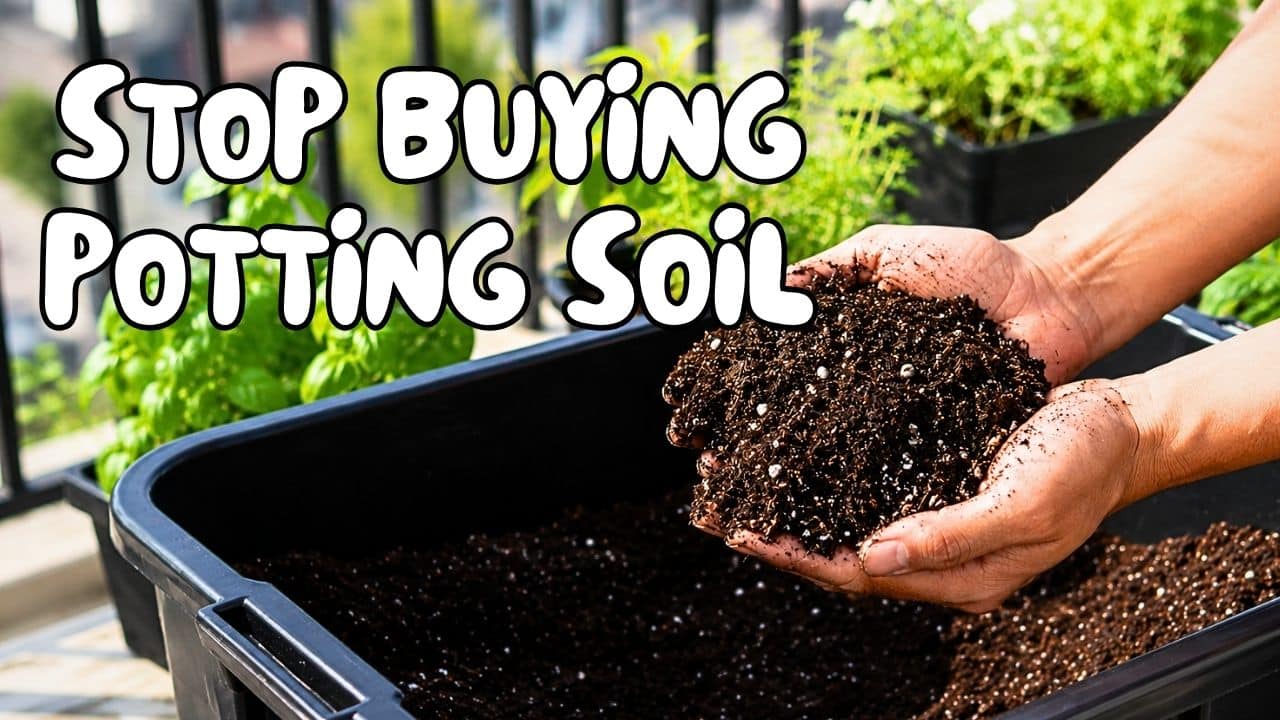
If you want to grow impressive tomatoes, eggplants, or peppers, the secret isn’t in the seeds—it’s in the medium. Most store-bought mixes are either too expensive or lack the long-term nutrition needed for a full season. Learning how to make potting soil at home allows you to control the nutrients, save money, and recycle materials you already have.
In this guide, we’ll move beyond simple seed-starting mixes to create a “living” soil that feeds your plants from spring until harvest.
How to Make Potting Soil: The “Power Mix” Ratio
While seedlings need a light, sterile environment, mature plants are “heavy feeders.” They require a balance of structure, water retention, and constant nutrition. This recipe is particularly effective if you are filling a large planter, where soil structure and drainage are critical to prevent the mix from becoming heavy and waterlogged over time.
The ideal ratio for a high-performance DIY mix is:
- 40% Base Layer: Recycled or old potting soil.
- 30% Nutrient Core: Mature, high-quality compost.
- 20% Moisture Retention: Hydrated coco coir.
- 10% Aeration: Perlite or vermiculite.
Step-by-Step Ingredients Breakdown
1. The Foundation: Recycled Potting Soil
Many gardeners make the mistake of throwing away last year’s soil. While it may be “spent” in terms of nutrients, its physical structure is still valuable. By using it as your base, you save money and keep waste out of landfills. We will “reactivate” this foundation with the other ingredients.
2. The Fuel: Mature Compost
Compost is the heart of any organic mix. It provides the essential macro and micronutrients that plants like tomatoes and eggplants crave.
- Note: Always use mature compost. Fresh organic matter can generate heat as it breaks down, which may damage sensitive roots
3. The Texture: Coco Coir
Coco coir is a sustainable alternative to peat moss. It acts like a sponge, holding onto water while keeping the mix light and fluffy.
- Preparation Tip: If using a compressed brick, add water slowly. The “sweet spot” is reached when a handful of the mix stays in a ball when squeezed but doesn’t drip excess water.
4. The Air: Perlite or Vermiculite
Without aeration, soil becomes compacted over time, suffocating the roots. Perlite (the white “popcorn” bits) or vermiculite creates tiny air pockets that ensure oxygen reaches the root system, which is vital for plant health and drainage.
Pro-Tips for Better Growth
Don’t Forget the Mulch
Even the best potting soil will fail if it dries out too quickly. After planting, cover the surface with a layer of mulch—such as straw, dry leaves, or shredded cardboard. This protects the soil biology and significantly reduces the need for frequent watering.
Scale Your Batch
One of the best parts of learning how to make potting soil is the flexibility. Whether you need a single bucket for a patio pot or a large batch for a raised bed, you can simply use the “parts” method: 2 parts soil, 1.5 parts compost, 1 part coco coir, and a half-part of perlite.
Conclusion: Sustainable and Affordable
By making your own mix, you avoid the high cost of premium brand-name soils. You are essentially creating a custom, high-end product using recovered materials and a few basic amendments. It’s better for your wallet, better for the planet, and definitely better for your harvest.
I’d love to hear from you: Do you add anything extra to your mixes? Maybe worm castings or a bit of bone meal? Share your secrets in the comments below!