Creating a beautiful and productive outdoor space doesn’t require a large bank account. Whether you have a tiny balcony or a compact patio, there are countless ideas for small gardens on a budget that allow you to grow your own food and flowers for almost nothing. By focusing on plant multiplication, creative recycling, and soil regeneration, you can turn a small corner into a thriving green sanctuary.
1. Smart Ideas for Small Gardens on a Budget: The “Eternal Plants” Strategy
The smartest way to save money in the long run is to invest in plants that give back year after year. Instead of buying annuals every spring, focus on perennials and “self-multiplying” species.
The Strawberry “Runner” Hack
Strawberries are a budget gardener’s dream. A single plant won’t just give you fruit; it will produce “runners” (stolons)—long arms that reach out to find new soil. By simply placing a small pot under these runners, you can grow a brand-new strawberry plant for free. Within a year, one plant can easily become ten.
Perennial Herbs and Aromatics
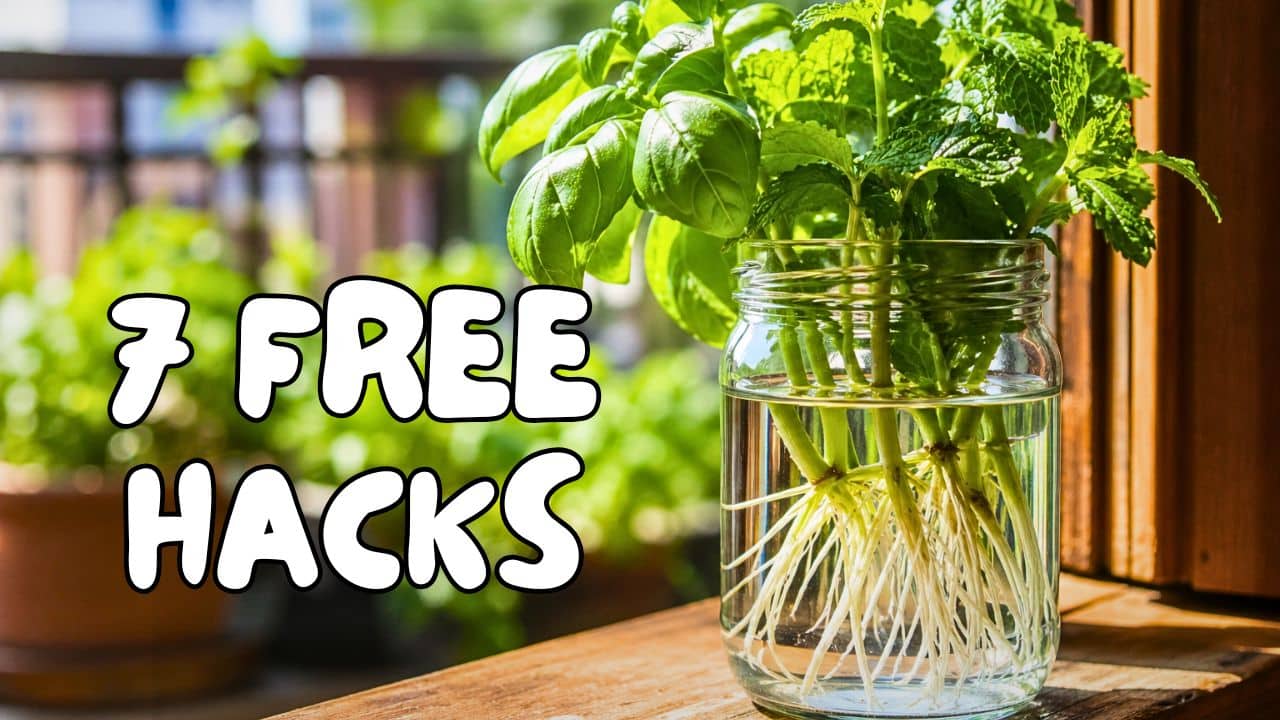
Herbs like Rosemary, Thyme, Mint and Sage are incredibly hardy. Once established, they can last for years. You can even start these from “cuttings” (multiplication). Ask a friend for a small branch, place it in water until roots appear, and you’ve just saved the cost of a nursery plant.
Pantry Potatoes
If you have potatoes sprouting in your cupboard, don’t throw them away! These “seed potatoes” can be grown in simple reusable shopping bags or buckets with drainage holes. It is one of the easiest ways to get a high yield in a very small space.
💡 Pro-tip: Vertical Pallets. Use discarded wooden pallets to create a vertical herb wall. This saves floor space and costs nothing if you find a pallet behind a local shop.
2. Regrowing: From Waste to Table
Why buy seeds when you can grow food from your kitchen scraps? This is the ultimate “zero-cost” gardening method.
- Green Onions and Leeks: Save the white root ends, place them in a glass of water for a few days, and then plant them. They will regrow indefinitely.
- Seed Salvage: Collect seeds from the tomatoes, peppers, or melons you eat. Dry them on a coffee filter or paper towel. It’s a great way to replicate the varieties you already enjoy.
3. Zero-Cost “Upcycled” Containers
Pots are often the most expensive part of a small garden. Look for these free alternatives instead:
- The Fishmonger’s Crate: Polystyrene crates are excellent for radishes and salads. They are lightweight, free, and act as great insulators for the roots.
- The Cardboard Box Experiment: You can grow fast-growing vegetables in a thick cardboard box for one season. Once the season is over, the box can be composted, feeding your garden for the next year.
- Repurposed Buckets: Old wine crates or food-grade buckets (like those from bakeries) make perfect planters. Just remember to drill drainage holes in the bottom to avoid root rot!
4. “Black Gold”: Managing Your Soil
Soil is alive, and you should never throw it away. You can “recharge” old soil by mixing it 50/50 with basic compost or a small bag of new, low-cost soil. To boost your soil’s nutrition for free, try these “kitchen hacks”:
- Eggshells: Crushed shells provide essential calcium, which is perfect for preventing tomato rot.
- Coffee Grounds: These add a nitrogen boost, perfect for leafy greens like spinach and kale.
- Small Balcony Composter: Start a tiny compost bin for your vegetable peelings to create your own organic fertilizer at home.