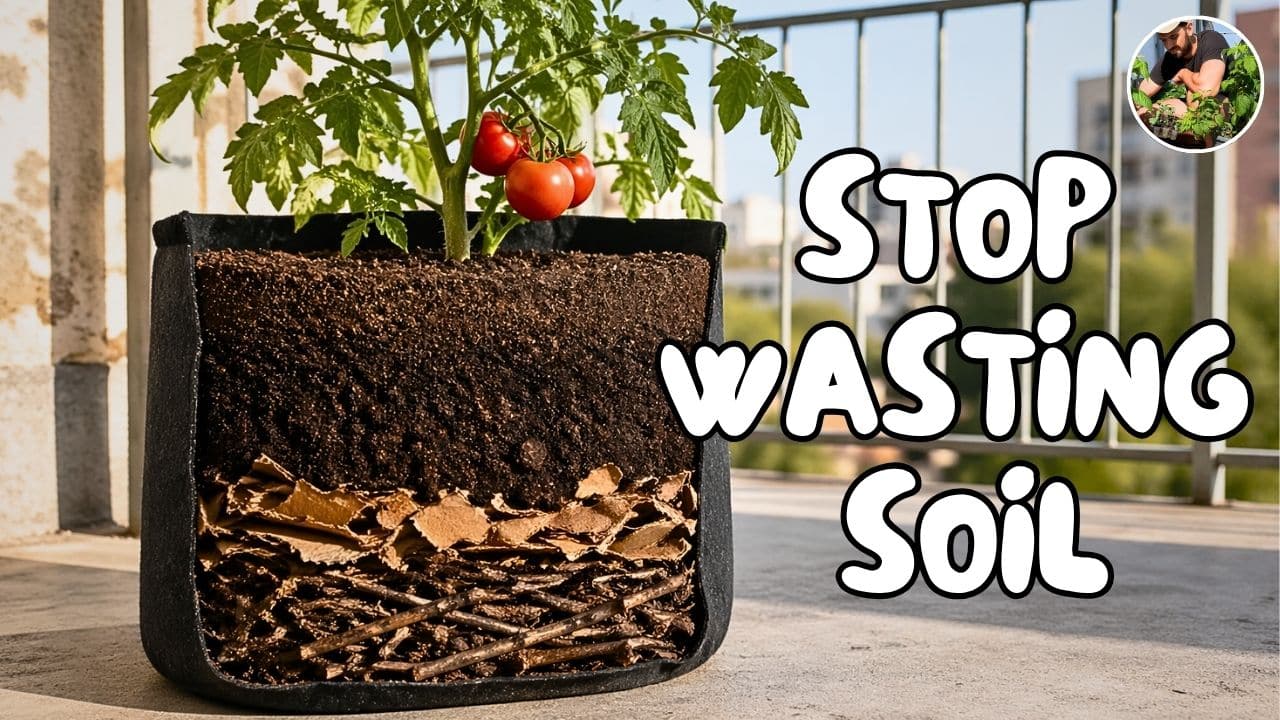
If you garden on a balcony or a terrace, you already know the struggle. Potting soil is expensive, and hauling those heavy 50-liter bags up four flights of stairs is a workout nobody asked for. If you are looking for how to fill a large planter without breaking the bank (or your spine), the secret isn’t buying more—it’s layering smart.
By using a “sandwich” method inspired by Hügelkultur, you can create a thriving environment for your plants while using half the store-bought soil.
The Best Strategy: How to Fill a Large Planter with Layers
The idea is simple: instead of filling the entire volume with expensive soil, we build a foundation of recycled organic materials. This works for grow bags, big pots, and raised beds. Here is the step-by-step breakdown.
1. The Foundation: Branches and Wood
Start with bulky organic matter. I use branches picked up from nearby parks or old wooden crates (just make sure to remove every single metal staple first!).
- The Science: This is a small-scale version of Hügelkultur. The wood breaks down slowly, holding moisture like a sponge and releasing nutrients over time.
- The Weight: It keeps the pot much lighter than if it were packed with wet soil—your balcony floor will thank you.
2. The Critical Step: Watering Between Layers
Between every layer, water lightly. This isn’t optional. If you skip it, the materials won’t settle properly, and a few months in, your soil level will drop by 10 centimeters as everything collapses underneath. Water as you go to ensure everything stays in place.
Adding Carbon and Reused Materials
3. The Carbon Layer: Shredded Cardboard
Next, add plain brown cardboard and egg cartons. Pro tip: Don’t just throw in one big flat sheet; it acts like a waterproof barrier and blocks drainage. Tear it into small pieces to let roots and water move through freely.
4. Recycle Your Old Soil
Now, fill the middle with soil from last year’s pots. Break up the big clumps with your hands. Those old roots from last season are fine to leave in—they’ll break down and add even more organic matter to the mix.
Finishing with the “Good Stuff”
5. The Nutrient Engine: Compost
Right in the middle, add a thick bed of compost. This is the strategic layer. This is where the roots will find their “fuel” once they get established. Think of it as the engine of the whole setup.
6. The Final Topping: Fresh Potting Mix
Top the last few inches with fresh potting soil. This gives your seeds or seedlings a clean, nutrient-rich start before they grow down into the recycled layers below.
Why This Method is a Game Changer
When you master how to fill a large planter using this layered approach, you aren’t just saving money. You’re creating a well-draining, self-sustaining ecosystem. You’ll end up with happier plants and a much lighter load to carry up those stairs.
What do you usually throw in your pots to save space? I’m always curious to hear what other gardeners are recycling. Let me know in the comments!