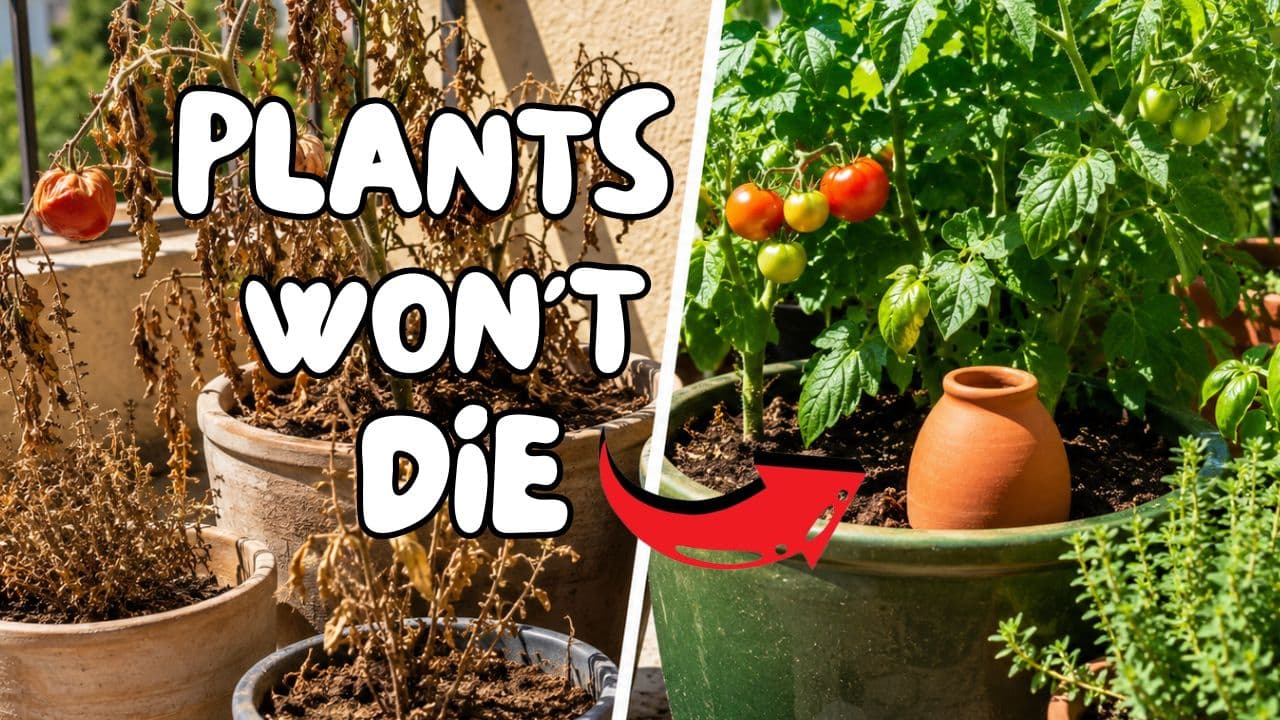
Going on vacation should feel exciting, not stressful. But if you grow tomatoes, peppers, herbs, flowers, or houseplants, one question can quickly ruin the mood: how do you keep plants watered while on vacation?
I learned this the hard way. After ten days away in August, I came back to a balcony full of crispy, dried-out plants. My tomatoes were gone, my herbs were dead, and the soil in every pot had turned into dust.
In this guide, I’ll walk you through five practical vacation watering methods, explain when each one works best, and help you choose the right solution depending on your plants, your setup, and how long you’ll be gone.
Before You Leave: Prepare Your Plants First
Before choosing a watering method, take a few simple steps to reduce how much water your plants need while you’re away.
First, water everything deeply the day before you leave. Don’t just wet the surface. Keep watering until the soil is fully hydrated and water starts draining from the bottom of the pot.
Second, move containers out of the hottest afternoon sun if possible. A pot in full sun on a balcony can dry out very quickly, especially in July or August. Even moving plants to a spot with morning sun and afternoon shade can make a big difference.
Third, group pots together. When plants are close to each other, they create a slightly cooler and more humid microclimate. This helps slow down evaporation.
Fourth, add mulch on top of the soil. Straw, shredded bark, dry leaves, grass clippings, or even small pebbles can help keep moisture in the soil for longer. This is especially useful for outdoor containers, grow bags, and raised beds.
Finally, remove dead leaves, harvest ripe vegetables, and avoid fertilizing right before you leave. Fertilizer can encourage new growth, and new growth usually needs more water.
Once your plants are prepared, you can choose the best watering system for your vacation.
1. Ask a Neighbor, Friend, or Family Member
The simplest option is to ask someone to water your plants while you’re away.
This can work very well if you have a reliable neighbor, friend, or family member nearby. It’s free, flexible, and can be used for almost any setup: houseplants, balcony pots, raised beds, vegetable gardens, or greenhouse plants.
But there are a few risks.
Someone who doesn’t garden may not understand how quickly containers dry out in summer. They might water too little, water too much, forget a day, or miss certain pots completely. For large outdoor containers in full sun, one missed watering can be enough to damage the plant.
If you choose this method, make it as easy as possible. Group your plants in one place, leave a watering can or hose ready, and write clear instructions. Instead of saying “water when needed,” say something like: “Water these pots every morning until water drains from the bottom.”
Best for: short or long vacations if you trust the person.
Cost: free.
Main downside: depends completely on someone else.
2. Use the Inverted Bottle Trick
The inverted bottle trick is one of the most popular DIY methods for watering plants while on vacation.
The idea is simple. Fill a plastic bottle with water, flip it upside down, and push the neck into the soil. As the soil dries, water slowly releases from the bottle.
This method is cheap, fast, and easy to set up. It can work well for a long weekend or a short trip of three to four days, especially for small and medium-sized pots.
However, it is not perfect.
The bottle can empty faster than expected, especially in hot weather. The opening can also clog with soil. And for big containers, raised beds, or thirsty plants like tomatoes and peppers, one bottle may not provide enough water.
For better results, test it before leaving. Set up the bottle a few days in advance and check how fast it empties. You can also make a tiny hole in the cap instead of leaving the bottle completely open. This helps control the water flow.
Best for: short absences, small pots, herbs, and indoor plants.
Cost: free.
Main downside: not reliable enough for long vacations in hot weather.
3. Install a Drip Irrigation Kit
If you want a more reliable system, drip irrigation is one of the best options.
A drip irrigation kit uses small tubes connected to a water source. A timer controls when the system turns on, and each plant receives a slow, measured amount of water directly near the roots.
This works very well for balconies, raised beds, greenhouses, vegetable gardens, and large collections of pots. It’s especially useful if you travel often or if you grow thirsty plants like tomatoes, cucumbers, peppers, basil, or zucchini.
The main advantage is consistency. Instead of flooding the soil once and letting it dry out, drip irrigation gives plants regular moisture.
But there are downsides. A decent setup can cost around $40 to $80 or more, depending on the size. You also need access to an outdoor tap or a water reservoir system. Installation takes time, and you must test it before leaving. A loose connector or badly placed dripper can cause dry plants — or a flooded balcony.
If you use drip irrigation, set it up at least one week before your vacation. Run it several times, check every dripper, and adjust the timer based on the weather and pot size.
Best for: balconies, gardens, raised beds, many containers, longer trips.
Cost: medium.
Main downside: requires setup, testing, and usually a water source.
4. Try a Wicking System
A wicking system is another low-cost way to keep plants watered while you’re on vacation.
You place a bucket or container of water next to the plant. Then you run a strip of fabric, cotton rope, or capillary matting from the water reservoir into the soil. Water travels through the wick by capillary action and slowly moistens the potting mix.
This method can work surprisingly well for indoor plants, herbs on a windowsill, and small pots. It’s quiet, cheap, and doesn’t require electricity or a timer.
But outside, it becomes less reliable. In full summer sun, the water reservoir can run out quickly. The wick can dry out, lose contact with the soil, or stop pulling water properly. Wind and heat also increase evaporation.
For best results, use a large water reservoir, keep it slightly higher than the pot, and make sure the wick is fully wet before you leave. Push the wick several inches into the soil so it stays in contact with the root zone.
Best for: indoor plants, small pots, herbs, short to medium absences.
Cost: low.
Main downside: less reliable outdoors in hot weather.
5. Use an Oya
My favorite method for keeping plants watered while on vacation is the oya.
An oya is an unglazed terracotta pot that you bury in the soil near your plants. You fill it with water, cover the top, and the water slowly seeps through the porous clay. The clever part is that water is released when the surrounding soil is dry. The plant roots grow toward the moisture and take what they need.
There’s no timer, no electricity, no hose, and no neighbor required.
Oyas are especially useful for containers, grow bags, raised beds, and vegetable plants. They work well with tomatoes, peppers, herbs, cucumbers, flowers, and many other plants that prefer consistent moisture.
Another advantage is efficiency. Because the water is released underground near the roots, there is less evaporation compared to surface watering. This is very helpful in summer heat.
The downside is the price. Commercial oyas can cost $15 to $25 each, sometimes more depending on the size. If you have several containers, that adds up quickly.
But you can make a simple DIY oya in about five minutes using a small unglazed terracotta pot, a saucer or lid, and a cork or waterproof seal for the drainage hole. The total cost can be under $5.
The most important thing is to test the terracotta pot before burying it. Fill it with water and check that moisture slowly seeps through the clay. If the pot is glazed, sealed, painted, or treated, it may not work properly.
Best for: containers, grow bags, raised beds, tomatoes, peppers, herbs, longer hands-off watering.
Cost: low if DIY, medium if commercial.
Main downside: one oya only covers a limited area, so large containers may need more than one.
Which Vacation Watering Method Should You Choose?
The best method depends on how long you’ll be away and what kind of plants you have.
For a weekend trip, the inverted bottle trick may be enough for small pots. For indoor plants, a wicking system can work well. For a large balcony or vegetable garden, drip irrigation is probably the most scalable option. If you have a trusted neighbor, that can also be a great backup.
But if you grow in containers and want a simple, hands-off, low-cost solution, oyas are hard to beat.
They don’t need electricity. They don’t rely on water pressure. They don’t flood the soil all at once. They simply release moisture slowly where the plant needs it most: near the roots.
Extra Tips to Keep Plants Alive While You’re Away
No matter which watering method you choose, these extra tips will improve your chances of success.
Test your system before vacation. Never set up a bottle, wick, drip kit, or oya for the first time on the day you leave. Give yourself at least three to five days to check whether it works.
Use larger pots when possible. Small pots dry out much faster than large containers because they hold less soil and less water.
Avoid black plastic pots in direct sun. They heat up quickly and can dry the soil faster.
Add mulch to outdoor containers. Even a thin layer can help reduce evaporation.
Move thirsty plants together. Tomatoes, peppers, basil, cucumbers, and leafy greens usually need more water than drought-tolerant herbs like rosemary, thyme, or lavender.
Don’t leave plants sitting permanently in water unless they are suitable for it. Some plants hate soggy roots and can rot if the soil stays too wet.
If you’ll be away for more than two weeks, combine methods. For example, use oyas plus mulch, or drip irrigation plus a neighbor checking once halfway through your trip.