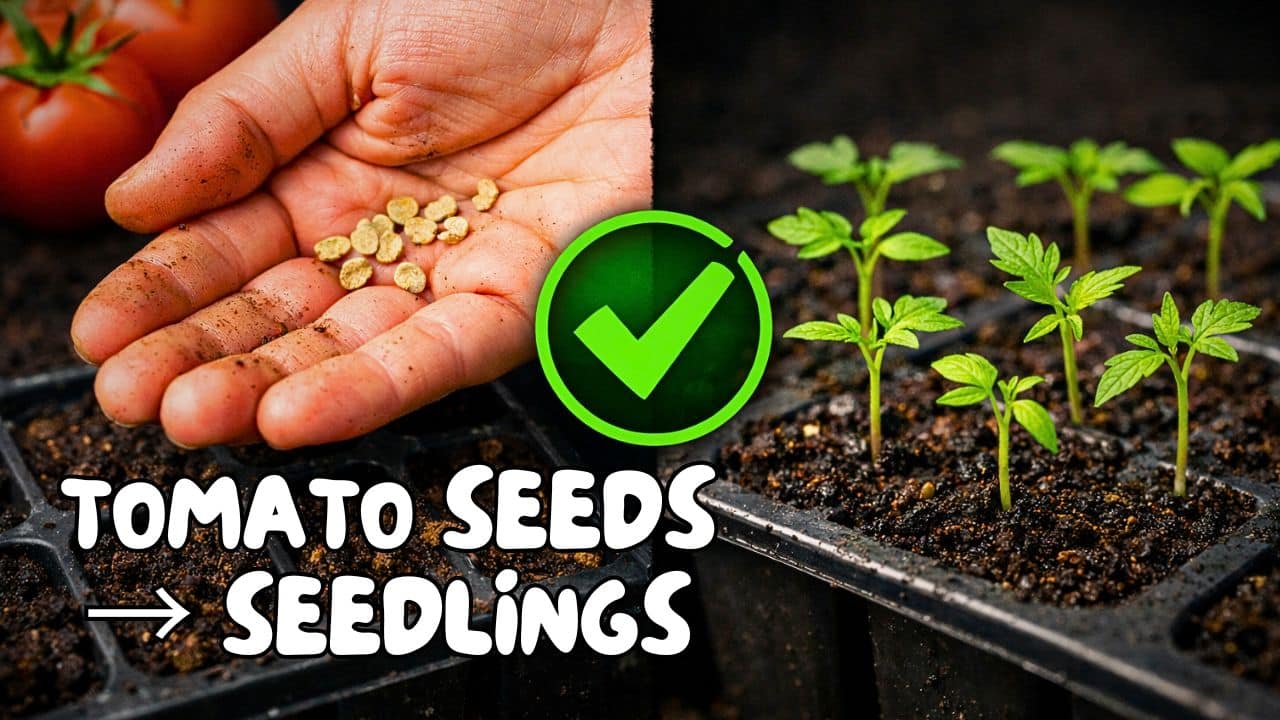
Knowing how to plant tomato seeds indoors is one of the most satisfying things you can do as a gardener. No garden required, no complicated setup — just a plastic box, the right compost, and a little patience. The key is timing: count back 6 to 8 weeks from your last expected frost date, and that’s when you should start your seeds indoors. In about thirty minutes, everything is in place. Ten days later, you have seedlings you grew completely from scratch.
This guide covers everything you need: what to use, how deep to sow, how to keep moisture right, and what to do the moment the first sprout appears.
What You Need to Plant Tomato Seeds Indoors
Nothing on this list is expensive or hard to find — and most of it can be reused or improvised.
- A seed starting box with a lid. Any clear plastic container with a cover works. The lid traps humidity during germination, which is exactly what you want.
- Seed starting compost, not regular potting mix. Finer and lighter, it holds moisture without waterlogging. Regular compost often contains bits of bark or straw that can physically block seedlings from pushing through — and it can also burn young seeds.
- Labels. Strips cut from old plastic containers — yogurt pots, cream cheese lids — work perfectly.
- A pencil. Pen and marker fade when they get wet. A pencil holds up for weeks of watering.
- A spray bottle. A rinsed-out household spray bottle is all you need.
- Room temperature water. Cold water can stress young seedlings.
Label First, Plant After
If you’re sowing more than one variety — regular tomatoes and cherry tomatoes, for example — divide your box into sections and put the labels in before you add any soil. Once the compost is in and seeds are covered, every section looks identical. Labeling first saves a lot of confusion later.
How to Prepare the Compost Before Sowing
Fill the box about three quarters full, keeping the compost loose. Then water it before planting and let it absorb fully. You want it moist all the way through. Squeeze a handful: if water drips out, it’s too wet; if it holds its shape and feels damp, it’s right.
Starting with already-moist compost means you won’t need to water heavily right after sowing — which can wash seeds sideways or push them too deep.
How Deep to Plant Tomato Seeds
The rule of thumb: plant a seed roughly twice as deep as it is wide. For tomatoes, that’s around half a centimetre — shallower than you might expect.
Use a pencil tip to make small holes, drop one or two seeds per spot, and cover lightly with a pinch of compost. Space them a few centimetres apart so seedlings have room to develop and can be separated later without tearing roots. Cherry tomato seeds are slightly smaller, but the depth and process are exactly the same.
After Sowing: Heat, Moisture, and the Light Timing That Matters
Before germination, mist gently with the spray bottle to settle the compost, then close the lid. Check daily. Condensation on the inside of the lid means moisture levels are fine. If it looks dry inside, give a light spray. No light is needed at this stage — but heat is essential. Aim for 20 to 25°C. Near a radiator works well.
The moment you see the first sprout, move the box under a grow light immediately. Don’t wait. Without adequate light, seedlings go leggy within days — they stretch upward, weaken, and never really recover.
Using a Grow Light for Indoor Tomato Seedlings
Set your light on a timer: 14 to 16 hours on, 9 hours off. Keep it close — 5 to 10 centimetres above the seedlings. Too far away and they’ll stretch toward it and get weak. Raise it gradually as they grow.
Should You Grow Basil Alongside Tomatoes?
If you have space in your box, it’s worth starting basil at the same time. Basil repels many of the insects that target tomatoes, and the two together in the kitchen are hard to beat. They share similar growing conditions, so it’s an easy addition to the same setup.
What Comes Next: Potting On
Around mid-March, when seedlings are big enough, they move to individual pots. This gives each plant the root space it needs before eventually going outside, and frees up your seed box for the next batch — peppers, for example.
Quick Recap: 5 Things That Make or Break Indoor Tomato Seeds
- Use seed starting compost, not regular potting mix
- Label before you sow, not after
- Sow at about 0.5cm depth — shallower than you think
- Provide warmth (20–25°C) before germination; no light needed yet
- Move seedlings under a grow light the moment the first sprout appears
The whole setup takes around thirty minutes. After that, it’s mostly a matter of checking in daily and moving fast once germination starts.