
For many urban gardeners and homeowners, “Full Sun” is a luxury they simply don’t have. Whether it’s the shadow of a neighboring apartment block, a north-facing balcony, or a backyard dominated by ancient oak trees, light can be a scarce resource.
However, a lack of direct sunlight isn’t a death sentence for your garden. In fact, shade gardening is one of the best-kept secrets for growing high-quality, tender produce that “sun-drenched” gardens struggle to maintain during the heat of summer.
Identifying Your Light : Not All Shade is Equal
To be successful, you first need to identify exactly what kind of “shade” you are working with. Most vegetables categorized as “shade-tolerant” will need at least some bright light to photosynthesize.
- Dappled Shade: This is the light that flickers through the leaves of overhead trees. It is excellent for most greens as it prevents leaf scorch.
- Partial Shade: This usually means the area gets 3 to 4 hours of direct sun (often in the morning) and is shaded the rest of the day. This is the “sweet spot” for root vegetables.
- Deep/Full Shade: This area receives no direct sun and limited ambient light. While difficult for vegetables, you can still grow certain herbs like Mint or Lemon Balm here.
Top Veggies growing in the Shade
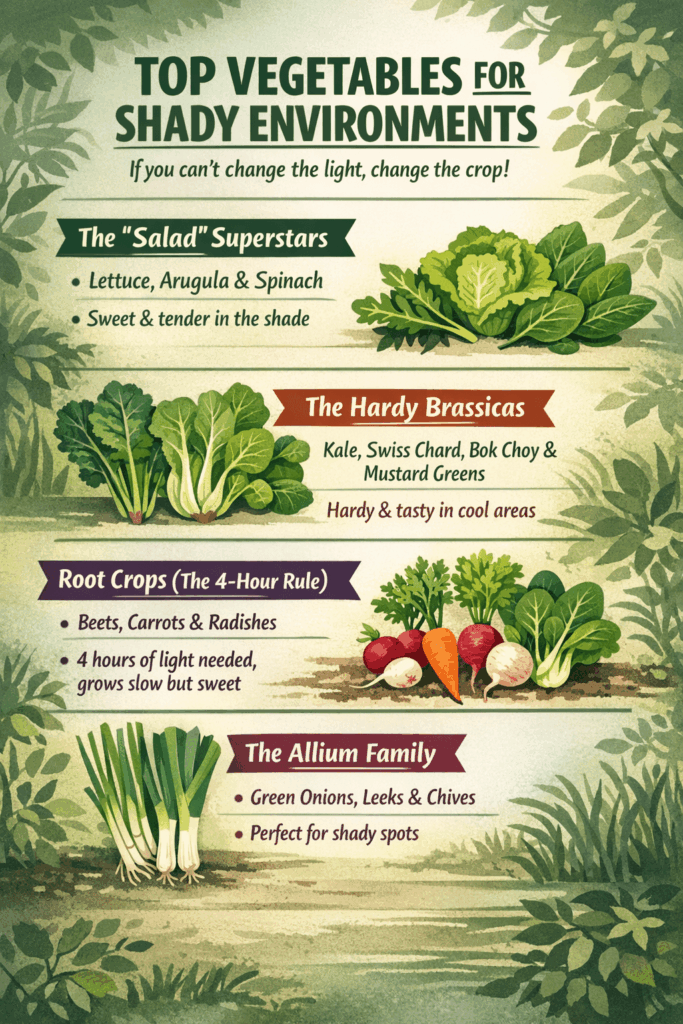
If you can’t change the light, change the crop. Here is a breakdown of what thrives when the sun goes down.
1. The “Salad” Superstars
Lettuce, Arugula (Rocket), and Spinach are the undisputed kings of the shade. In full sun, these plants often “bolt”—they send up a flower stalk and become bitter and inedible as soon as the temperature rises. In the shade, they grow more slowly, resulting in sweeter, thinner, and more delicate leaves for a much longer harvest window.
2. The Hardy Brassicas
Kale, Collard Greens, and Swiss Chard are incredibly tough. While they might not grow the massive, leathery leaves seen in farm fields, the shade-grown versions are often preferred by chefs because they are more tender. Bok Choy and Mustard Greens also perform exceptionally well in cooler, darker corners.
3. Root Crops (The 4-Hour Rule)
Vegetables like Beets, Carrots, and Radishes can grow in partial shade, provided they get at least 4 hours of light. The secret here is patience; they will take longer to “bulk up” than they would in the sun, but the cooler soil often results in a higher sugar content.
4. The Allium Family
Green onions (Scallions), Leeks, and Chives don’t require much energy to produce their flavorful stalks. Since you aren’t waiting for them to produce a giant bulb (like a standard onion), they are perfectly happy in the shadows of taller plants or walls.
The Art of Shade Gardening in Pots
Growing in containers is the most effective way to maximize a shady space. It gives you total control over the variables that the shade usually complicates.
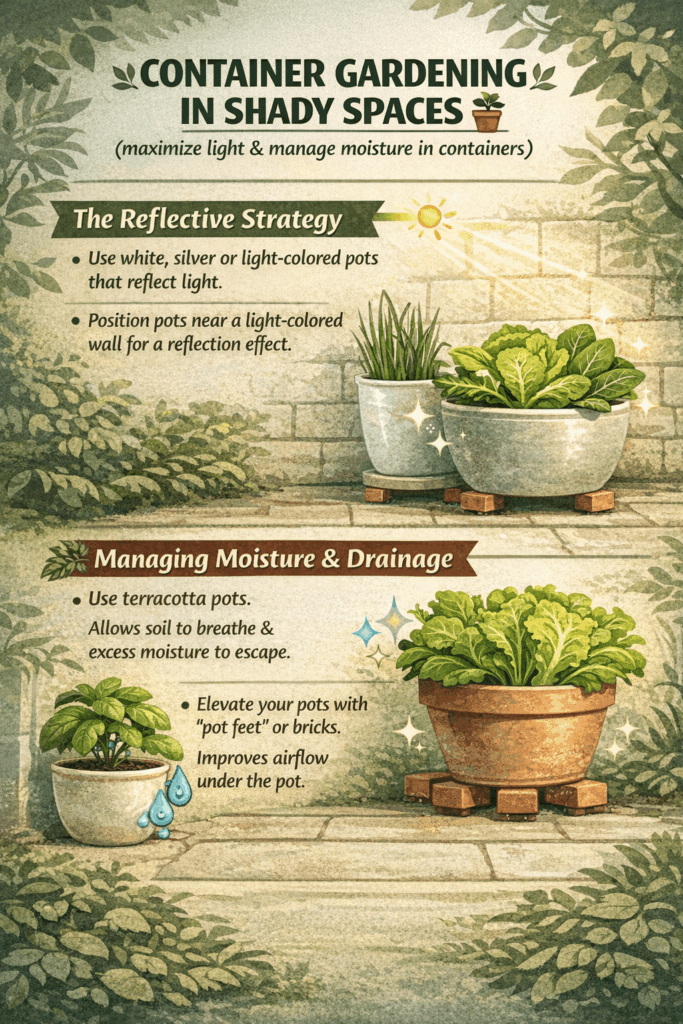
The “Reflective” Strategy
In a shady spot, every photon counts. When choosing pots, avoid dark greens or blacks which absorb light. Instead, use white, silver, or light-colored glazed pots. Position these against a light-colored wall. This creates a “bounce” effect, reflecting ambient light onto the undersides of the leaves, which can significantly boost growth rates in dark corners.
Managing Moisture and Drainage
The biggest challenge with shade gardening is that water evaporates slowly. Soil in the shade stays damp for much longer, which can lead to root rot or fungal issues.
- Use Terracotta: These porous clay pots allow the soil to “breathe” and excess moisture to escape through the walls.
- Elevate Your Pots: Use “pot feet” or bricks to lift your containers off the ground. This improves airflow underneath the plant and helps prevent the damp conditions that attract slugs and snails.
Soil Quality in the Shade
Because plants in the shade grow more slowly, they don’t need “heavy” fertilizers which can lead to salt buildup in the soil. Use a high-quality, well-draining potting mix enriched with compost. Avoid high-nitrogen fertilizers that encourage “leggy” (weak and tall) growth; instead, look for balanced, slow-release organic options.
The “Shade Pest” Defense
The primary downside of a shady garden is that it is the natural habitat of slugs and snails. Since they hate the drying sun, they will congregate in your shady vegetable patch.
- Copper Tape: Wrap a strip of copper tape around the rim of your pots; it gives slugs a small “static shock” that keeps them away.
- Morning Watering: Always water your shade pots in the morning. This gives the surface of the soil time to dry before the nocturnal pests come out to play.