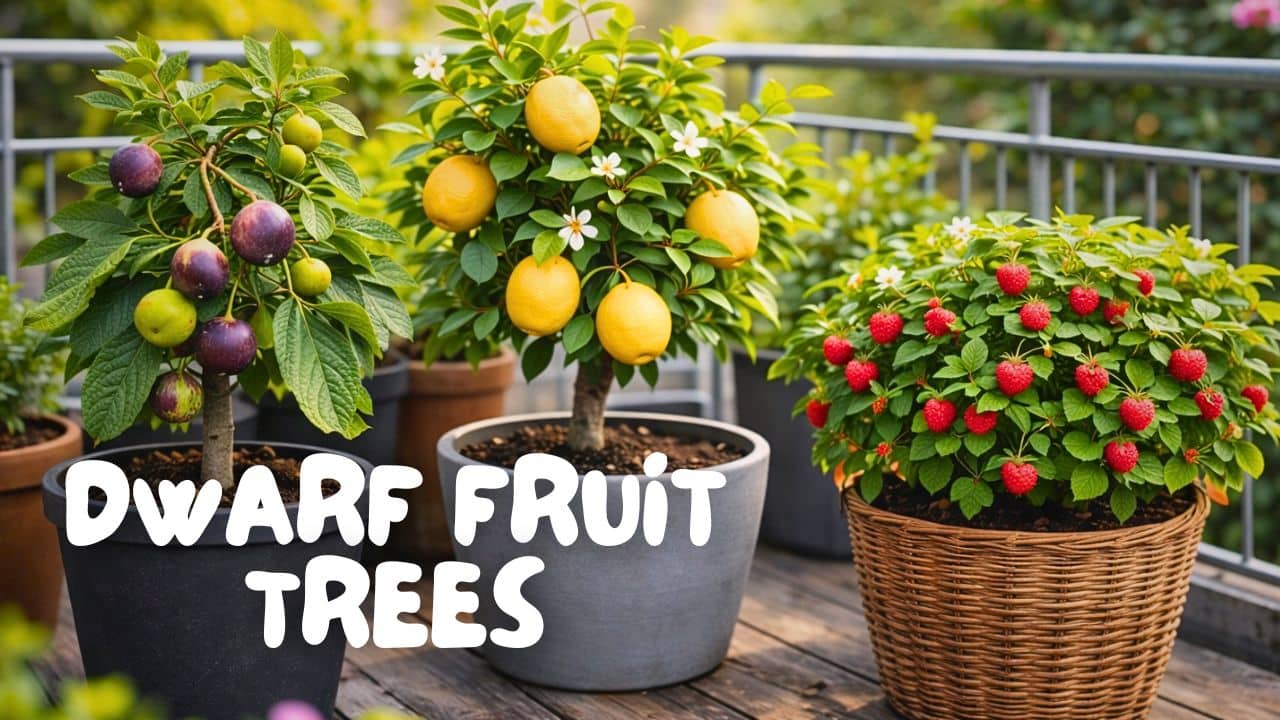
Have you ever dreamed of picking a crisp apple or a juicy peach right from your backyard, but felt limited by a small patio or a tiny urban garden? Enter the world of dwarf fruit trees. These compact wonders are changing the game for home gardeners, proving that you don’t need an orchard-sized plot to enjoy a bountiful harvest.
In this guide, we’ll explore everything you need to know about choosing, planting, and caring for dwarf fruit trees.
What Exactly Are Dwarf Fruit Trees?
A dwarf fruit tree is not a different species of plant. Instead, it is a regular fruit tree variety that has been grafted onto a specific type of rootstock.
While a standard apple tree can soar to 25–30 feet (7.5 to 9 meters), a dwarf variety typically reaches a manageable 8 to 10 feet (2.5 to 3 meters). There are also “semi-dwarf” options that sit comfortably in the middle.
Why Choose Dwarf Varieties?
- Space Efficiency: Perfect for balconies, patios, and small yards.
- Faster Production: Dwarf trees often bear fruit in just 2–3 years, compared to 5–10 years for standard trees.
- Easier Maintenance: Pruning and harvesting can all be done from the ground—no ladders required!
- Higher Yield per Square Foot: You can plant several different types in a small area.
Top Dwarf Fruit Tree Varieties for Your Garden
Most popular fruits are now available in dwarf form. Here are some of the most reliable performers:
| Fruit Type | Popular Dwarf Varieties | Best Climate |
|---|---|---|
| Apple | Cameron Select, Honeycrisp, Garden Delicious | Cold to Temperate |
| Pear | Conference, Beth, Summercrisp | Temperate |
| Peach | Pixzee, Bonanza | Warm / Sunny |
| Cherry | Stella, Sunburst | Temperate |
| Citrus | Meyer Lemon, Bearss Lime | Subtropical (or indoor) |
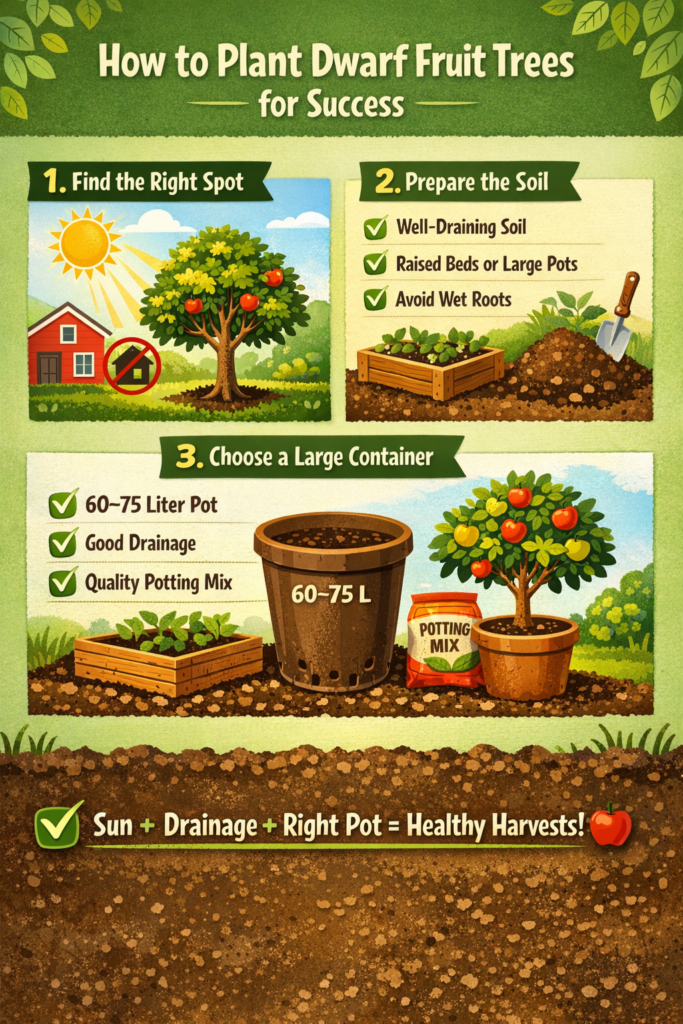
How to Plant Dwarf Fruit Trees for Success
To get the most out of your trees, the planting phase is critical. Whether you are planting in the ground or in a container, follow these steps:
1. Location is Key
Dwarf fruit trees need at least 6 to 8 hours of direct sunlight daily. Good sun exposure ensures the fruit develops its sugars and ripens properly.
2. Soil and Drainage
These trees hate “wet feet.” Ensure your soil is well-draining. If you have heavy clay soil, consider planting in raised beds or large pots to avoid root rot.
3. Planting in Containers
If you are growing on a balcony or terrace:
- Use a pot with a capacity of at least 60 to 75 liters.
- Ensure the pot has adequate drainage holes.
- Use a high-quality potting mix rather than heavy garden soil.
Essential Care and Maintenance
While dwarf trees are easier to manage, they still require consistent attention to thrive.
Watering
Because dwarf trees have smaller root systems, they dry out faster than full-sized trees. Check the soil regularly—especially during hot summer months. The soil should be moist to the touch but never soggy.
Pruning
Pruning is vital to maintain the shape and health of the tree.
- When: Late winter or early spring before new growth starts.
- Why: To remove dead wood and open up the canopy so light and air can reach the ripening fruit.
Fertilizing
Apply a balanced organic fertilizer in early spring (before the end of march). Avoid over-fertilizing with nitrogen, as this can lead to lush green leaves but very little fruit production.
Conclusion: Your Miniature Orchard Awaits
Dwarf fruit trees are the perfect solution for the modern gardener. They combine the beauty of ornamental plants with the functional reward of fresh, organic produce. Whether you have a small garden or a simple sunny corner on your deck, there is a dwarf tree waiting to join your home.
Pro Tip: If you’re a beginner, start with a Meyer Lemon or a Dwarf Apple. They are incredibly hardy and provide very satisfying results for first-time growers.