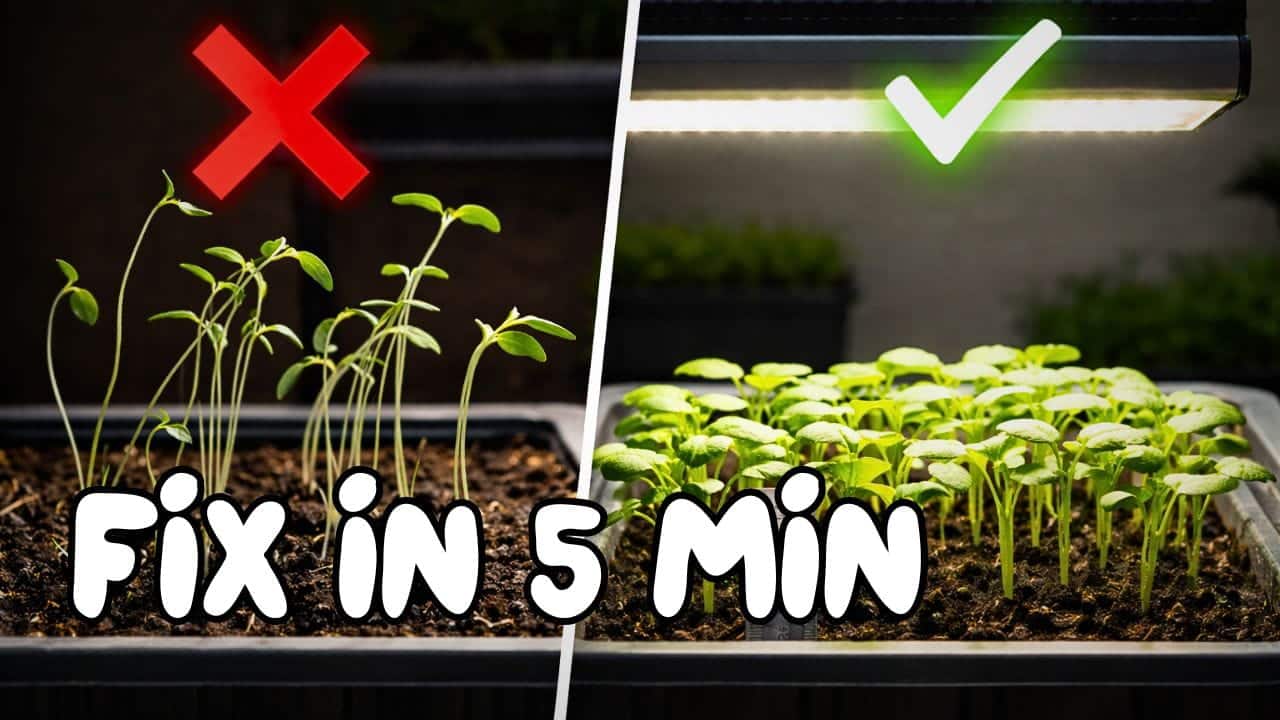
There is nothing more frustrating for a gardener than watching your tiny sprouts turn into tall, spindly “noodles” that eventually flop over and die. If you’ve been asking yourself, “Why are my seedlings leggy?”, you are definitely not alone.
I recently made a classic beginner mistake with my parsley crop. One day they looked fine, and the next, they were stretching toward the ceiling, looking incredibly fragile. In this guide, I’ll break down exactly what causes this “stretching” and how you can prevent it.
Identifying the Problem: What Does “Leggy” Look Like?
Before we dive into the “why,” let’s look at the “what.” A healthy seedling should be short, stocky, and have a deep green color.
If your plants look like the ones in my recent video—tall, thin, and almost see-through—they are leggy. This condition, scientifically known as etiolation, happens when the plant focuses all its energy on vertical growth at the expense of structural integrity.
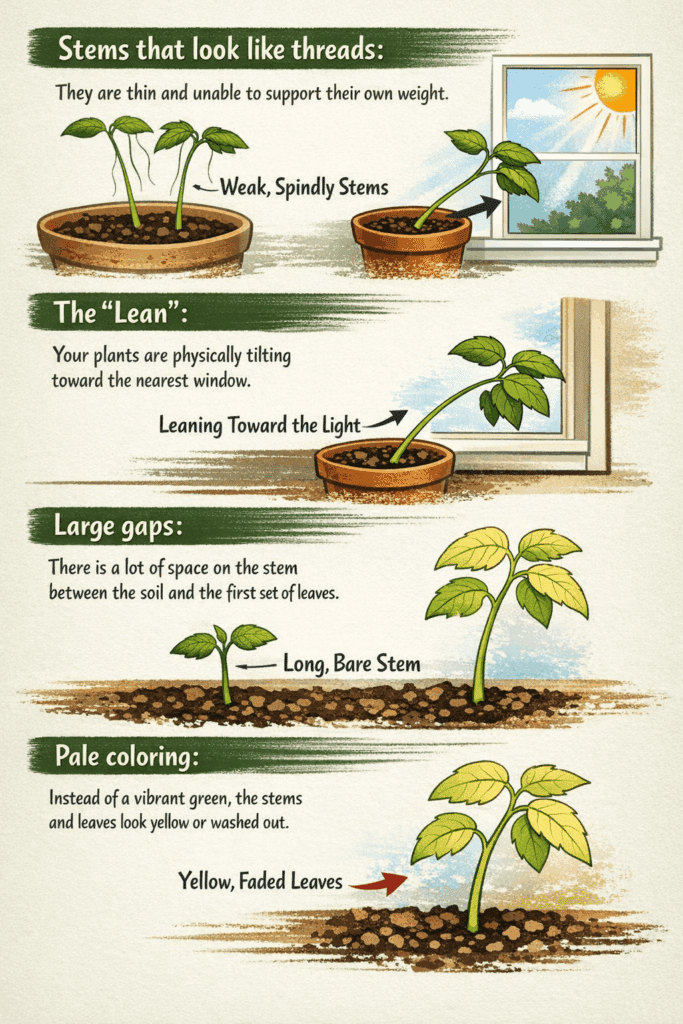
Common Symptoms:
- Stems that look like threads: They are thin and unable to support their own weight.
- The “Lean”: Your plants are physically tilting toward the nearest window.
- Large gaps: There is a lot of space on the stem between the soil and the first set of leaves.
- Pale coloring: Instead of a vibrant green, the stems and leaves look yellow or washed out.
Why Are My Seedlings Leggy? The 3 Main Reasons
I’ll be honest: I made almost every mistake in the book with my parsley. Here are the three main culprits that cause seedlings to stretch.
1. Insufficient Light Intensity
This is the most common answer to the question, “Why are my seedlings leggy?” Plants are biologically programmed to find light to survive. If the light source is too weak or too far away, the seedling will desperately “stretch” its stem to get closer to the sun.
- The Window Trap: Many of us start seeds on a windowsill. Even a bright, south-facing window often isn’t enough in the winter or early march. The glass filters the light, and the hours of daylight are simply too short.
- Duration: Most vegetable and herb seedlings require 14 to 16 hours of light per day to stay compact and strong.
2. High Temperatures and “The Radiator Effect”
Temperature plays a massive role in how fast a plant grows. While warmth is great for germinating seeds, too much heat after they’ve sprouted can be a disaster.
If your grow space is too warm (for example, if it’s sitting right above a radiator), it signals the plant to grow rapidly. Because the light usually can’t keep up with this heat-induced growth spurt, the plant becomes tall and weak.
3. Competition and Overcrowding
Sometimes, the issue isn’t the environment, but the neighbors. If you sowed your seeds too thickly, they will start to compete for resources.
As soon as their leaves touch, they begin a race to “out-climb” each other to reach the light first. This competition results in a forest of spindly stems rather than a few healthy, robust plants.
How to Prevent Legginess in the Future
Once you understand why your seedlings are leggy, you can take steps to ensure it never happens again:
- Use a Grow Light: Don’t rely on the sun alone. A simple LED grow light placed just 2 to 3 inches (5-7 cm) above the tops of the plants makes a world of difference.
- Thin Your Seedlings: Be brave! Snip the weakest plants with scissors to give the strongest ones room to breathe.
- Keep it Cool: Once seeds sprout, move them to a slightly cooler area (around 18-20°C) to slow down vertical growth and encourage root development.
Pro Tip: If your seedlings are already a bit leggy, you can sometimes save them by transplanting them deeper into the soil or increasing the light intensity immediately.