
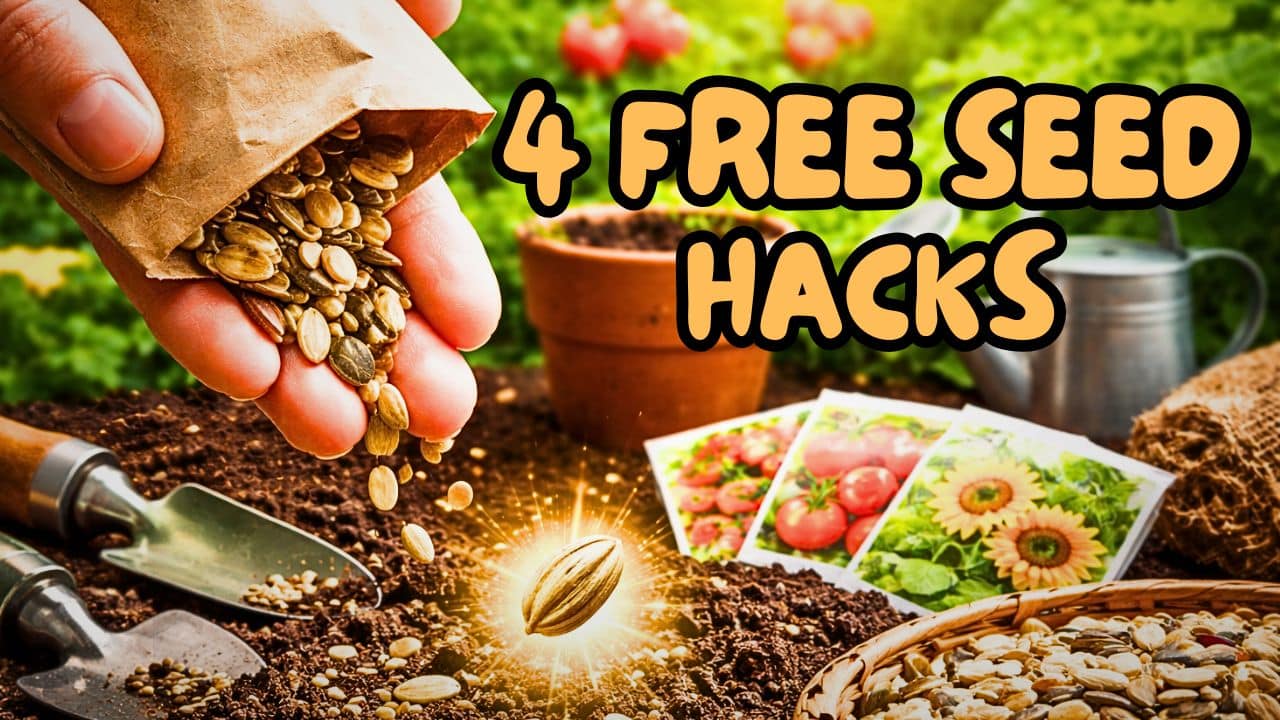
If you’ve ever walked into a garden center and walked out $50 poorer just from buying tiny paper packets of seeds, this is for you. Gardening is often sold as an expensive hobby, but the truth is that nature provides abundance for $0 every single day. If you are wondering how to get free seeds without a credit card, you just need to know where to look.
Whether you are starting your first balcony pot or trying to fill a backyard on a budget, these methods will help you grow a massive harvest without spending a dime.
1. The Grocery Store “Hack” (Saving from Food)
The easiest way to get seeds is from the food already sitting in your kitchen. But there is a catch: you must choose organic produce.
Standard supermarket vegetables are often treated with sprout inhibitors to keep them “fresh” longer, or they are hybrids that won’t grow into the same plant. To see if your kitchen seeds are ready for action, try the “Floating Test”: Put your seeds in a glass of water. If they sink, they are likely healthy. If they float, they are “empty” and probably won’t sprout.
The Advice: Scoop seeds from organic tomatoes, peppers, squash, or melons. Rinse them thoroughly in a fine-mesh sieve and let them dry completely on a paper towel.
Pro Tip for Tomatoes: Tomato seeds have a slippery gel that prevents them from sprouting. Put the seeds and the “goo” in a small jar with a little water for 2-3 days until a bit of mold forms. This breaks down the gel and kills diseases. Rinse and dry them after!

2. The “Secret” Seed Library
Did you know you can borrow seeds just like books? Many public libraries now host Seed Libraries. It’s a genius system: you take a packet of seeds for free, grow them, and if you can, you “return” some saved seeds at the end of the season to keep the library going.
The Advice: Search Google for “Seed library [Your City Name]” or just ask your local librarian. Even in major cities like Paris, London, or New York, these are becoming a staple of urban gardening. It is one of the most underrated free resources available.
3. Join the “Gardening Underground” (Swaps & Groups)
Gardeners are some of the most generous people on earth. We always have too many seeds. Most seed packets come with 50+ seeds, but a balcony gardener only needs two or three.
The Advice: Join local Facebook groups or Reddit communities (like r/seedswap). If you live in an apartment, put a small note in the lobby.
Why it works: Seeds generally only last 3 to 5 years. Most gardeners would much rather give their surplus to a neighbor than watch them expire in a drawer. You can also visit community gardens in the autumn; you will often see plants that have “bolted” (gone to seed). If you see a gardener there, ask if you can take a few dried seed heads—they usually love to share!
4. Urban Gardening Associations & Non-Profits
In almost every major city, there are non-profits dedicated to “greening” the streets. These associations often receive massive seed donations from companies or have surpluses from their community projects that they want to distribute to the public.
The Advice: Look for urban farming non-profits or community garden projects in your area. They often hold “open house” days where they give away free seeds, seedlings, or even compost to beginners to encourage local biodiversity. Some organizations even send free seed kits to low-income residents or school projects.
What’s Next?
Now that you have your seeds for free, you need to make sure they actually grow. Don’t make the mistake of planting them in a dark corner or drowning them with too much water!
Want to make sure your free seeds don’t die?
I’ve put together a guide on the 10 best gardening tips for beginners make. It covers everything from the “Finger Test” for watering to choosing the right pot size so your free seeds turn into a massive harvest.