Let’s be honest: most of us are terrified of killing our plants. We buy a beautiful basil plant, forget about it for three days, and suddenly we’re attending a tiny green funeral.
I’ve been there. In my early days, I was so desperate to feed my potted vine that I actually “borrowed” soil from a public park in Paris (shh, don’t tell the authorities!). I’ve tried growing raspberries in old cabinets and failed more times than I can count.
But here is the secret: Gardening isn’t about having a “green thumb.” It’s just about learning from the plants you kill. If you’re ready to start your first garden, here are the 10 best gardening tips for beginners to ensure you actually get a harvest.
1. Start Small for “Easy Wins”
The biggest mistake beginners make is trying to turn their balcony into a full-scale farm overnight. You buy 20 different seed packets, plant them all at once, and by week three, you’re totally overwhelmed. One of the best gardening tips for beginners is accepting that small, early successes matter more than ambition.
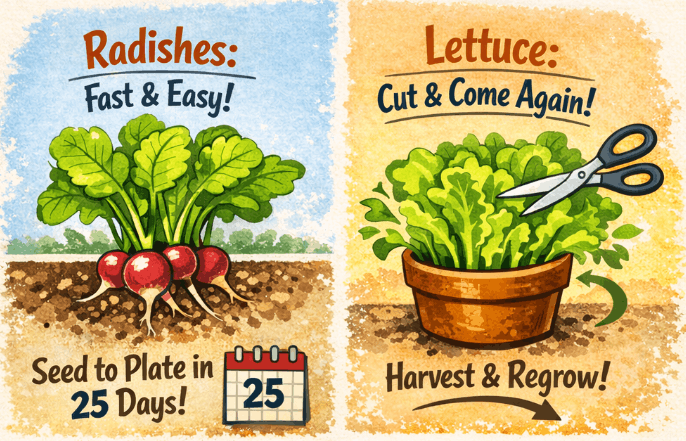
The Advice: Aim for “bulletproof” plants. Radishes are the kings of instant gratification : they go from seed to plate in just 25 days. Lettuce is also amazing because it’s “cut-and-come-again.” Start with just 2 or 3 pots, master them, and then expand.
2. Sunlight Matters More Than Food
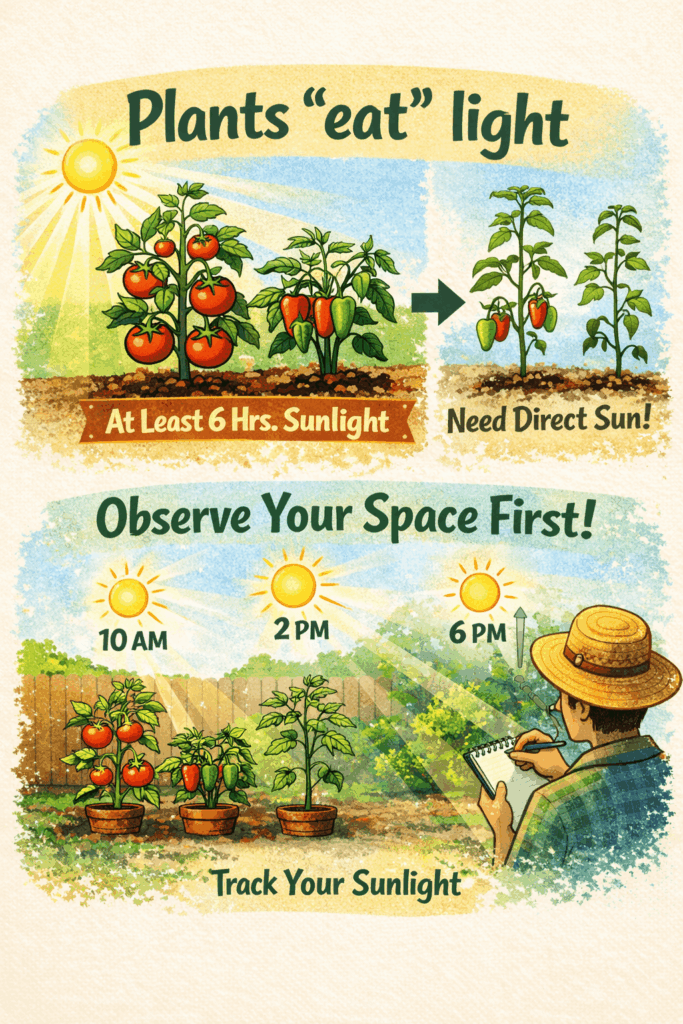
Plants “eat” light. Most fruiting vegetables (tomatoes, peppers, zucchini) need at least 6 hours of direct sunlight per day. Without it, they will grow tall and skinny but never produce a single fruit.
The Advice: Before buying anything, spend a day observing your space. Where is the sun at 10 AM? 2 PM? 6 PM? Don’t fight your environment; work with it.
3. Embrace the Shade (If You Have To)
Is your balcony north-facing or tucked between two tall buildings? Don’t give up! Many plants actually hate intense heat and prefer partial shade.
The Advice: Focus on leafy greens and delicate herbs. Spinach, kale, arugula, parsley, and mint will do much better in your shady spot than on a scorching south-facing balcony.
4. Master the “Finger Test” for Watering
Statistically, overwatering kills far more plants than drought. When you water too much, you drown the roots—literally. The water fills the air pockets in the soil, the roots suffocate, and the plant dies while you think you’re being helpful.
The Advice: Don’t follow a rigid schedule. Instead, stick your index finger into the soil up to the second knuckle. If it feels moist, leave it alone. If it feels dry, give it a good soak.
5. Drainage is a Life-or-Death Matter
I see so many beginners buy beautiful decorative pots that have no holes at the bottom. This is a death trap. Without an exit, water pools at the bottom, bacteria grows, and your roots rot in days.
The Advice: Always ensure your pots have drainage holes. If you find a stylish pot without holes, keep the plant in its plastic nursery pot inside the fancy one. Never let a plant sit in a “pool” of water.
6. Soil Doesn’t Have to Be Fancy
You don’t need the $15 “ultra-premium” soil with fancy branding. For beginners, a basic universal potting mix is more than enough to get started. Keeping things simple like this is one of the best gardening tips for beginners, because it removes unnecessary cost and confusion early on.
The Advice: Just avoid the absolute cheapest “bottom shelf” bags, which often lack nutrients. Also, don’t use dirt from the woods or a public park (I learned that the hard way!). On a balcony, the soil is the plant’s only pantry, make sure it’s light and fluffy.
7. Respect the “Root Space” (Pot Size)
Trying to grow a massive tomato plant in a tiny yogurt cup is like trying to run a marathon in shoes three sizes too small. Roots need room to expand to find nutrients.
The Advice: A tomato plant generally needs about 10–15 liters of soil to be happy. A basil plant is fine with 2 or 3 liters. Before you transplant, do a quick search: “Pot size for [your plant name].”
8. Upcycle Your Equipment
Gardening shouldn’t be a luxury hobby. Before you run to the garden center to buy plastic trays and expensive pots, look around your kitchen.
The Advice: Use egg cartons or toilet paper rolls for seed starters. For larger containers, old cleaned-out buckets or even those big blue IKEA bags (poked with drainage holes) make incredible planters.
9. Consistency Beats Perfection
You don’t need to be a botanist. Plants are incredibly resilient : they want to live! They can handle a missed watering or a bad pruning job.
The Advice: Observation is your best tool. Spend 2 minutes every day just looking at your plants while you drink your coffee. Noticing a drooping leaf or a new sprout early is how you learn.
10. Google Is Your Best Friend
No one knows everything. If your plant has weird spots or tiny bugs you don’t recognize, don’t panic, search for it immediately.
The Advice: Type: “Why are my tomato leaves turning yellow?” In 30 seconds, you’ll have a solution (often involving just water and a bit of organic soap). Gardening is a lifelong learning process.
Ready to get your hands dirty?
Gardening is a journey of trial and error. I’ve killed more plants than I can count, but each one taught me how to finally grow the thriving balcony garden I have today.
If you found these tips helpful, make sure you go back to the top and watch the full video for the visual breakdown of how I set everything up.